TL;DR
New Zealand has three main types of camping: freedom camping (free, self-contained vehicles only, hundreds of designated spots), DOC campsites (NZ$8–20 per night, basic facilities, stunning locations), and holiday parks / TOP 10 parks (NZ$35–65 per night, full facilities including showers, laundry, and powered sites). The Campermate app maps all of them. Our pick of standout spots: Lake Pukaki (freedom camping, South Island), Okarito Lagoon DOC (West Coast), Taupo TOP 10 (DeBretts with hot pools), and Milford Sound Lodge Rainforest Campervan Park.
New Zealand's best campsites are rarely the ones with the most facilities. They are the ones nobody could build a hotel on — a river flat under the Southern Alps, a beach behind the dunes, a lake edge that reflects the mountains at six in the morning.
The Department of Conservation runs several hundred of them, and a self-contained campervan is the key that opens the lot. Here are the ones we send guests to, and how to find your own.
What makes a campsite worth stopping for?
Position, almost always. The facilities follow a fixed national scale and cost accordingly; the view does not.
| Basic | Free | Free | Basic toilets, water may be from a tank |
| Standard | NZ$10–20 | NZ$5–10 | Toilets, water supply, vehicle access |
| Serviced | NZ$25 | NZ$12.50 | Flush toilets, hot showers, kitchen bench |
| Holiday park | NZ$45–65 for two | varies | Power, laundry, proper showers, wifi |
Infants stay free everywhere. The useful pattern: the cheaper tiers are usually the better sites, because DOC put them where the landscape is rather than where the plumbing is easy.
The best campsites on the South Island
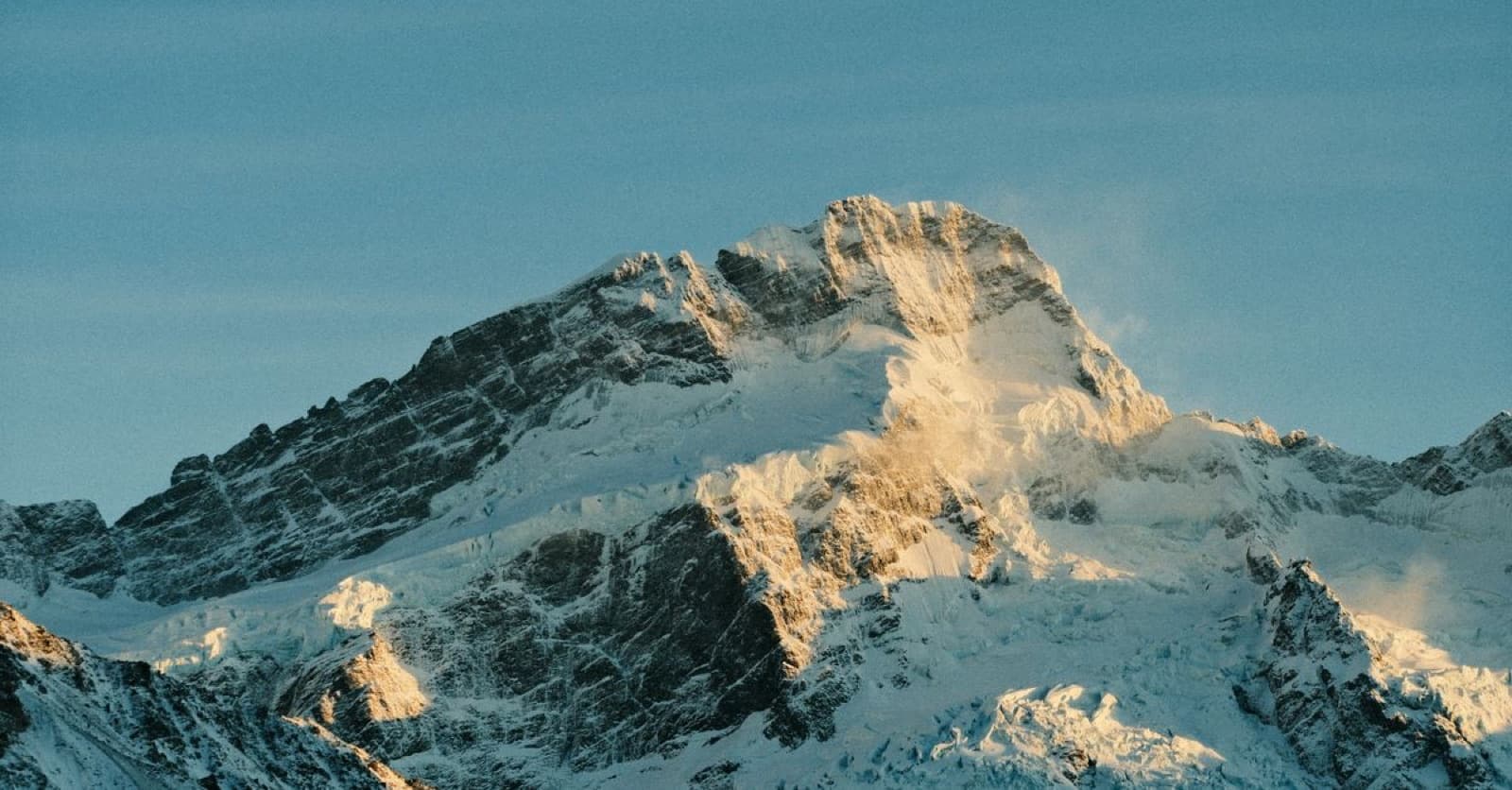
**White Horse Hill, Aoraki/Mount Cook** — under the highest mountain in the country, with the Hooker Valley Track leaving from the campsite. Basic facilities, extraordinary position, and cold at night whatever the month.
**Lake Tekapo** — turquoise water from glacial rock flour, and an International Dark Sky Reserve overhead. Stay up; this is one of the darkest accessible skies anywhere.
**Totaranui, Abel Tasman** — golden sand and native bush, tucked far enough up the coast to stay quiet. Book ahead in summer.
**Lake Mapourika** — still water and dawn reflections just north of Franz Josef. Bring repellent; this is sandfly country.
**Curio Bay, the Catlins** — a petrified forest on the shore, yellow-eyed penguins coming in at dusk, and the Southern Ocean straight ahead with nothing between you and Antarctica.
**Arthur's Pass** — a tiny village ringed by peaks, and kea in the car park that will strip the rubber from your windscreen wipers given ten minutes alone.
The best campsites on the North Island
**Mangahuia, Tongariro** — beech forest at around 800 m, close to the start of the Tongariro Alpine Crossing. The practical base if you are walking it, since the shuttles leave before dawn.
**Hot Water Beach, Coromandel** — dig your own hot pool in the sand at low tide. Check the tide table before you plan the day; it only works two hours either side.
**Mount Maunganui** — a beachside site right in town, at the foot of the Mount. Unusual in being both convenient and worth it.
**Bay of Islands, Paihia** — subtropical, warm, and on the water. Also where New Zealand as a nation begins, at the Waitangi treaty grounds.
**Lake Taupo** — a lake the size of Singapore filling a volcanic caldera, with Huka Falls ten minutes away.
Our full campsite directory covers 41 of them with what each one costs and what it has.
What is the best app for finding campsites?
**CamperMate** and **Rankers** are the two most New Zealanders and travellers actually use. Both show DOC sites, council sites, dump stations and drinking water, with reviews recent enough to be useful.
The DOC website itself is the authority on its own network — categories, fees and whether a site takes bookings — and it is worth checking there before relying on an app for anything official.
Download offline maps before you leave town. Coverage disappears for long stretches, particularly on the South Island, and it disappears exactly where the good sites are.
Where can you stay overnight in a campervan?
Anywhere that is signposted for it, and nowhere that is not.
There is no national right to camp. DOC land, council land and LINZ land each have their own rules, and every district writes its own bylaws — so a bay that is legal can be a NZ$400 infringement fifty kilometres up the same coast.
What unlocks the network is **certified self-containment**: the vehicle stores its own waste water and has a fixed toilet, and carries a current green warrant. Ours do. The rules changed in 2026 and portable toilets no longer qualify — our freedom camping guide covers what that means.
Do you need to book campsites in advance?
For most of the year, no — and that is the whole point of travelling this way.
Two exceptions. Between about 20 December and the end of January, when New Zealanders take their own summer holidays, the popular sites fill and several DOC campgrounds move to bookings. And a handful of sites take bookings year-round because demand never drops; Totaranui is one.
Outside that window, arrive by four and you will find somewhere. Arriving early matters more than booking: the self-registration boxes are easier to find in daylight, and so is a level pitch.
What should you look for when you arrive?
- **Level ground.** The most common cause of a bad night, and the easiest to fix by moving three metres.
- **Which way the wind comes from.** An exposed, breezy site has fewer sandflies than a sheltered one by a stream.
- **Where the sun rises.** Facing east is lovely in autumn and brutal in January.
- **The dump station**, if you have not emptied in a few days — they are busiest first thing.
- **The sign.** Every site has one, and it tells you the category, the fee and whether the water needs boiling.
If you are still working out where these fit into a route, our North Island itinerary links the northern ones together, and our campers are all certified for the DOC network.
Frequently asked questions
Freedom camping is free, DOC campsites are typically NZ$8–20 per person, and holiday parks run about NZ$35–65 per night for a powered site with full facilities. Mixing all three keeps your accommodation spend low.
Standouts include Lake Pukaki (free, glacier-blue lake with Mount Cook views), Okarito Lagoon DOC on the West Coast, Taupo DeBretts with hot pools, and the Milford Sound campervan park — the only camping right by the fiord.
Holiday parks and popular DOC sites should be booked ahead in summer, especially around Queenstown, Picton and the Coromandel. Freedom camping is first come, first served — arriving by mid-afternoon in peak season is wise.
DOC campsites are simple and inexpensive but often in spectacular, remote settings. Holiday parks cost more and offer full facilities — hot showers, laundry, kitchens and power — ideal every few days to recharge.
Related pages
Sources & official info
Written by Lauran & Nikki
Family owners of JustGoodCampers, living in New Zealand and helping travellers explore it by camper. More about us