TL;DR
There are no native land snakes in New Zealand — none in the forests, campgrounds or long grass. It's one of very few countries on earth that's completely snake-free, thanks to 80 million years of isolation and strict biosecurity. The only exception is sea snakes that very rarely wash up on northern beaches. There are no crocodiles or dangerous mammals either, so hiking and camping here are refreshingly worry-free.
Picture your first night in New Zealand. You've parked the camper beside a quiet lake, the bush behind you is loud with birdsong, and you walk down to the water in bare feet without a second thought. In most of the world you'd scan the ground first. Here, you don't have to — because there are no snakes in New Zealand.
So, are there snakes in New Zealand? No. New Zealand is one of only a handful of countries on earth with no native land snakes at all. You won't meet one on a hike, in a campground, or in the long grass beside your camper. It's illegal to keep them, and the only snakes that ever turn up are sea snakes that very occasionally drift in on warm ocean currents — far offshore, and no threat to travellers.
Why are there no snakes in New Zealand?
It comes down to geography and a lot of luck. New Zealand broke away from the ancient supercontinent Gondwana around 80 million years ago, long before snakes spread across the world. With no land bridge to anywhere else, they simply never made it here — and neither did most land mammals. What evolved instead were birds: flightless, ground-nesting, and utterly unbothered by predators. It's the same isolation that gave New Zealand the kiwi, the kākāpō and the dawn chorus you'll fall asleep to.
Today, strict biosecurity keeps it that way. Bringing a snake into the country is illegal, and even zoos aren't allowed to hold them. New Zealand takes this so seriously that a single snake sighting can make the national news.
The one exception: sea snakes
There is a small caveat. Two species — the yellow-bellied sea snake and the banded sea krait — occasionally wash up on northern beaches when tropical currents run warm. They're venomous but shy, they can barely move on land, and they're protected by law, so if you ever spot one you simply leave it alone and report it. Honestly, you can travel the whole country for weeks and never come close. In years of living and camping here, we've never seen a single snake.
Are there crocodiles or other dangerous animals in New Zealand?
This is the reassuring part. New Zealand has no crocodiles, no dangerous land mammals, and just one venomous spider you're ever likely to hear about: the katipō, a small, shy, endangered native that lives in coastal dunes and almost never bites anyone. An introduced Australian redback turns up in a few dry corners of the South Island, but bites are rare and antivenom exists. The real risks on a New Zealand trip are far more ordinary — the strong sun, cold fast-flowing rivers, and narrow one-lane bridges you'll want to slow down for.
What this means for your camper trip
For travellers, a snake-free country is a quiet kind of freedom. You can hike without watching your feet, let the kids run through long grass, and set up camp on a riverbank or forest edge without a worry. It's one of the many reasons New Zealand is such an easy, relaxed place to explore by camper. Pair that with freedom camping on self-contained sites and a few tips on driving on the left, and the only thing left to plan is where to wake up next.
Ready to see it for yourself? Take a look at our campers and start mapping your route.
Are there poisonous spiders in New Zealand?
Two species can bite you, and neither is a realistic worry. Venomous is the accurate word, since they bite rather than get eaten, but almost everybody searches for poisonous spiders — so, the honest answer: there are two.
The **katipō** is a small native relative of the redback, found in driftwood and dune grass on some beaches. It is endangered, rarely seen, and a bite is now extremely uncommon. The **redback**, introduced from Australia, is established in parts of Central Otago and around some ports.
Nobody has died of a spider bite here in over a century, antivenom exists for both, and most New Zealanders have never seen either species. Shake out your shoes if you leave them outside overnight, which is sensible anywhere.
Is it safe to walk anywhere in New Zealand?
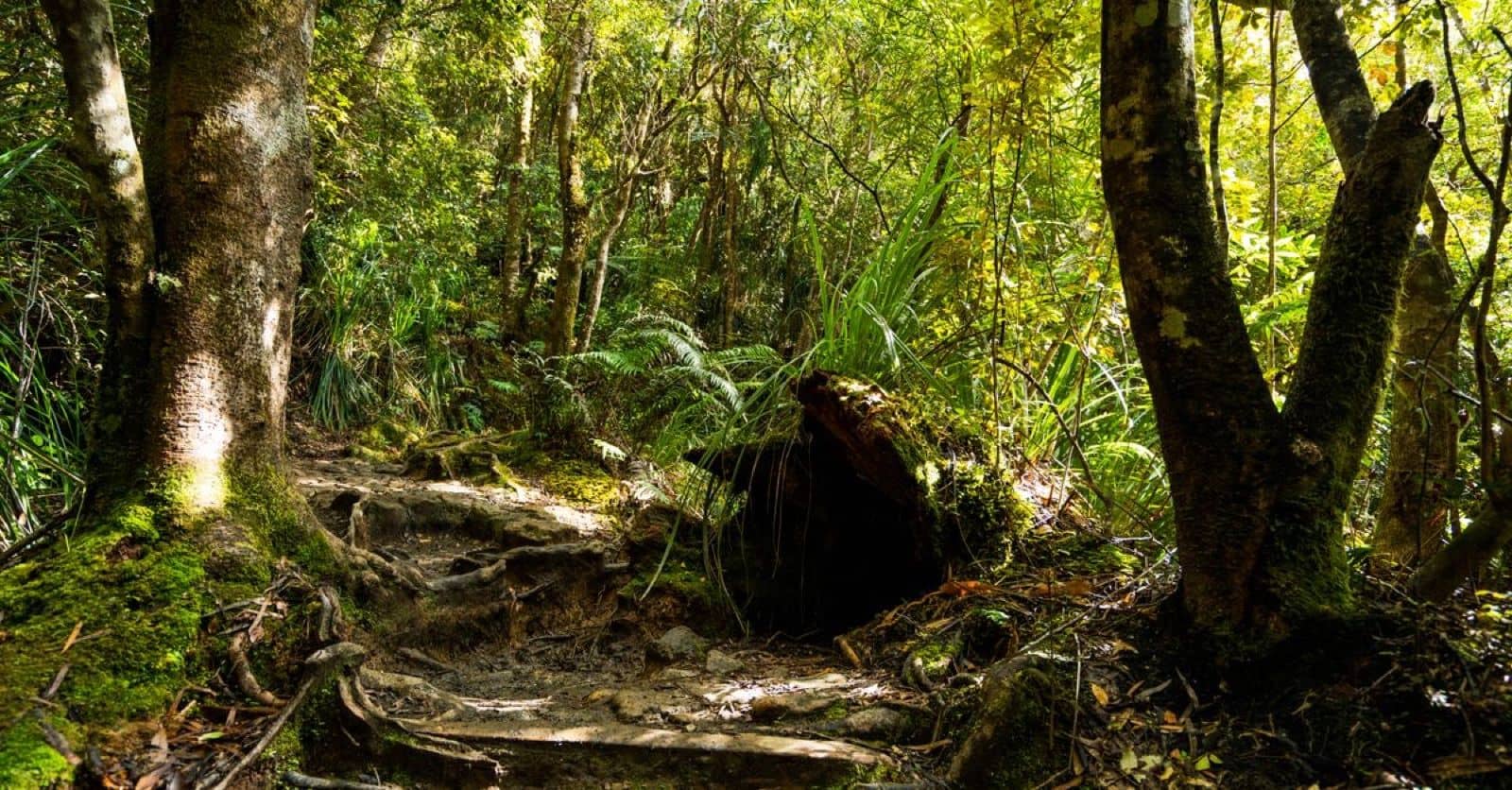
From a wildlife point of view, yes, and it is one of the genuinely unusual things about this country. There is nothing in the bush that will hurt you.
Preparation here is about the weather and the terrain — the same sensible things you would think about walking anywhere. What you never have to think about is what lives in the bush. For a lot of visitors, particularly anyone arriving with Australia in mind, that takes a day or two to sink in and then becomes one of the quiet pleasures of the place.
Frequently asked questions
No. There are no native land snakes in New Zealand, so they're simply not something you need to think about while hiking or camping. The only snakes ever recorded are sea snakes that rarely wash ashore on northern beaches.
The katipō spider, a small and endangered native found in coastal dunes. Its bite is serious but extremely rare — the katipō is shy, protected, and almost never encountered.
Occasionally. Yellow-bellied sea snakes and banded sea kraits sometimes drift in on warm currents and wash up on northern beaches. They're venomous but docile, protected by law, and almost never seen by travellers. Don't touch one if you find it.
Yes. New Zealand's biosecurity laws ban importing or keeping snakes entirely — even zoos aren't permitted to hold them. It's a big part of why the country has stayed snake-free.
Two, and both are rare. The katipō is a small native relative of the redback that lives in driftwood and dune grass on some beaches; it is endangered and a bite is now extremely uncommon. The Australian redback is established in parts of Central Otago and around some ports. Antivenom exists for both, and nobody has died of a spider bite here in over a century.
No. There are no crocodiles or alligators anywhere in New Zealand, in the wild or in captivity. The country is too cool for them and the same isolation that kept snakes out kept crocodilians out too.
Almost none. No snakes on land, no crocodiles, no dangerous land mammals, and nothing in the bush that will hurt you at night. Two spiders can bite and neither is a realistic worry. The things that actually catch travellers out are the sun, cold fast-flowing rivers and sandflies on the West Coast.
Sources & official info
Written by Lauran & Nikki
Family owners of JustGoodCampers, living in New Zealand and helping travellers explore it by camper. More about us