
TL;DR
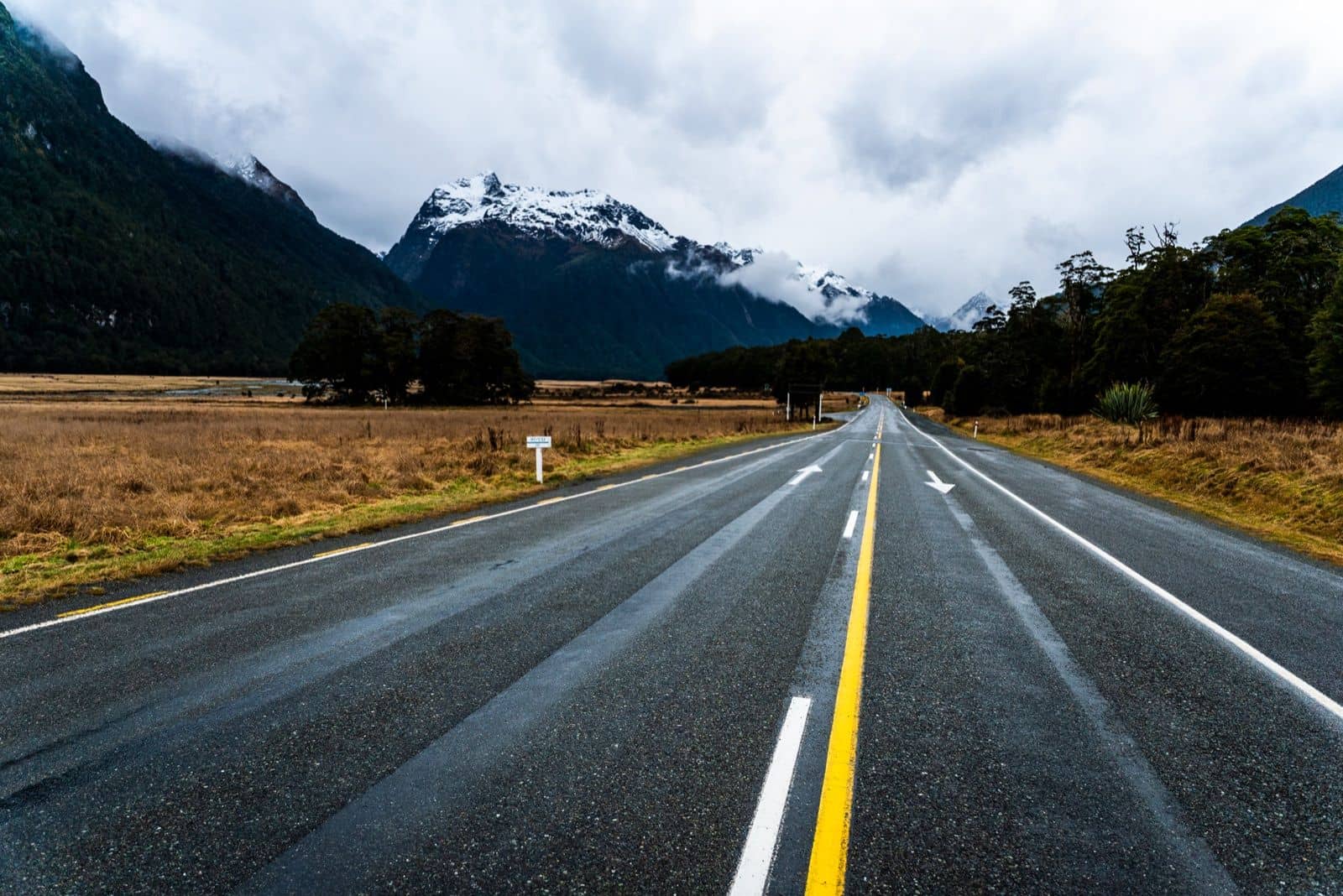
Driving a campervan in New Zealand is manageable for most international visitors. Key rules: drive on the left, give way to the right at intersections, and slow down for one-lane bridges (the diamond sign means you have priority). The motorhome speed limit is 90 km/h on open roads. Mountain roads in the South Island — particularly the Homer Tunnel approach to Milford Sound and the Haast Pass — take longer than maps suggest. Always check road conditions on the NZTA website before heading into remote areas.
New Zealand looks small on a map and drives large. The roads are narrow, the corners are constant, and the country is longer than most people expect — Auckland to Queenstown is further than London to Barcelona.
Add a campervan and everything takes longer again. Here is what actually catches visitors out, from people who hand over the keys and then answer the phone when something goes wrong.
How long does driving really take in New Zealand?
Longer than your phone says. Satellite navigation assumes an average speed that these roads do not support, and it does not know you are in a five-metre vehicle.
**Add a third to whatever the app estimates.** In a campervan, over hill country or a mountain pass, add half. This is the single most useful thing to know before you plan an itinerary.
| Auckland – Rotorua | 230 km | 3 hours |
| Auckland – Wellington | 650 km | 9 hours |
| Picton – Christchurch | 340 km | 5 hours |
| Christchurch – Queenstown | 480 km | 6–7 hours |
| Queenstown – Milford Sound | 290 km | 4 hours each way |
| Queenstown – Franz Josef | 350 km | 5.5 hours |
Three to four hours of driving is a comfortable day with stops. Six is a long one. Anything more and you have spent the day in the cab rather than the country.
Which side of the road, and what trips people up?
New Zealand drives on the left. Most visitors adapt within an hour, and then make exactly two mistakes.
**Roundabouts.** Give way to the right, and signal your exit. It is the moment muscle memory from home reasserts itself.
**Pulling out of a car park or fuel stop.** Nearly everyone drifts right at least once, usually after a break when the road is empty and there is nothing to copy. Say it out loud for the first few days: keep left.
What road rules should you know before you arrive?
- **Give way to the right** at roundabouts and uncontrolled intersections.
- **Open road limit is 100 km/h**, urban is 50 km/h, and it is enforced by camera and patrol.
- **Seatbelts are compulsory** for everyone, in every seat.
- **Using a handheld phone while driving is illegal**, and enforced.
- **Drink-drive limits are low** — 250 micrograms per litre of breath for drivers 20 and over, and zero for under-20s.
- **Headlights on** when visibility is poor, which on the West Coast is often.
What is different about New Zealand roads?
Several things that have no European equivalent.
**One-lane bridges.** Hundreds of them, many on main roads. A sign shows a large arrow and a small one: large means you have priority. If in doubt, stop and wait.
**No hard shoulders.** On most rural roads there is nowhere to pull over. Use the marked slow-vehicle bays, and use them often — locals drive these roads daily and you are on holiday.
**Long gaps between fuel stops.** On the South Island in particular, fill up at half a tank rather than at the warning light. There is no petrol at Milford Sound, and mobile coverage vanishes long before you get there.
What is different about driving a campervan specifically?
Height, width and the wind.
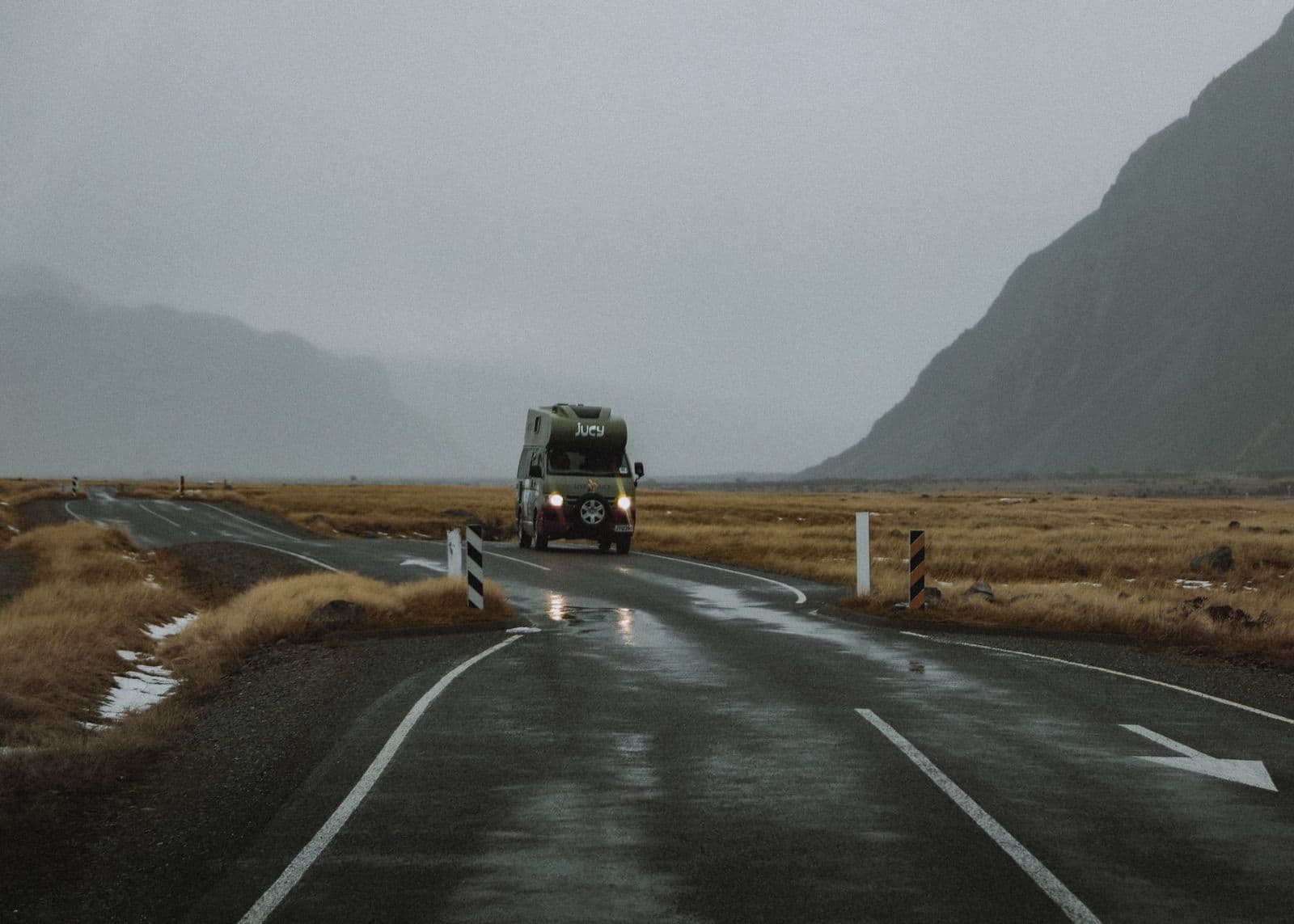
You are taller than you think. Check the clearance on car park entrances, drive-throughs and some older service station canopies before committing. You are also wider, which matters on those one-lane bridges and on winding coastal roads with no centre line.
**Crosswinds are the real surprise.** A high-sided vehicle on an exposed section — the Desert Road, the Canterbury Plains, the approach to Wellington — gets pushed around hard. Both hands, slow down, and do not overtake trucks in it.
And you take longer to stop. A loaded camper carries considerable weight; leave far more room than you would in a car, especially on descents.
Do you need an international driving permit?
Not if your licence is in English. You can drive on a valid overseas licence for up to twelve months.
If your licence is not in English, you need either an **International Driving Permit** or an official translation, carried alongside the original licence. Dutch and German licences are not in English — arrange this before you fly, because you cannot get it here.
What about road user charges?
If your campervan runs on diesel, you pay for the roads by the kilometre rather than at the pump. That is Road User Charges, and almost every campervan here is diesel.
We pass it through at **NZ$0.084 per kilometre**, read from the odometer at the end of the hire. On a 2,000 km trip that is NZ$168. Petrol vehicles pay nothing extra because the tax is already in the fuel price. The whole thing is explained in our RUC guide.
What should you do if the weather turns?
Take it more seriously than you would at home. Weather here changes fast, and mountain passes close.
In winter, **Arthur's Pass, the Lindis, the Crown Range and the Desert Road** can require chains or close entirely. Check the New Zealand Transport Agency road conditions before setting out, not after.
The general rule that serves visitors best: if the forecast is bad, move the day rather than the plan. There is nowhere in this country you cannot see tomorrow instead.
Working out how far you can realistically travel is the hardest part of planning. Our North Island route sets out a fortnight with the driving times already built in, and our campers list what you are actually manoeuvring.
Frequently asked questions
Not really, but it's different. You drive on the left, the roads are scenic and often winding, and there are one-lane bridges. Most visitors feel comfortable within a day — take the first day gently and allow more time than the distances suggest.
Yes. New Zealand drives on the left, with the steering wheel on the right. The trickiest moment is turning at intersections, where it's easy to drift right out of habit, so stay conscious of it at first.
It's a defensive-driving guide to following distance: stay at least four seconds behind the vehicle in front, and more in the rain. On winding roads it gives you time to react safely.
The open-road limit is 100 km/h for cars but 90 km/h for heavier motorhomes. On most scenic routes you'll comfortably average less, because the roads are winding and worth taking slowly.
Related pages
Sources & official info
Written by Lauran & Nikki
Family owners of JustGoodCampers, living in New Zealand and helping travellers explore it by camper. More about us