TL;DR
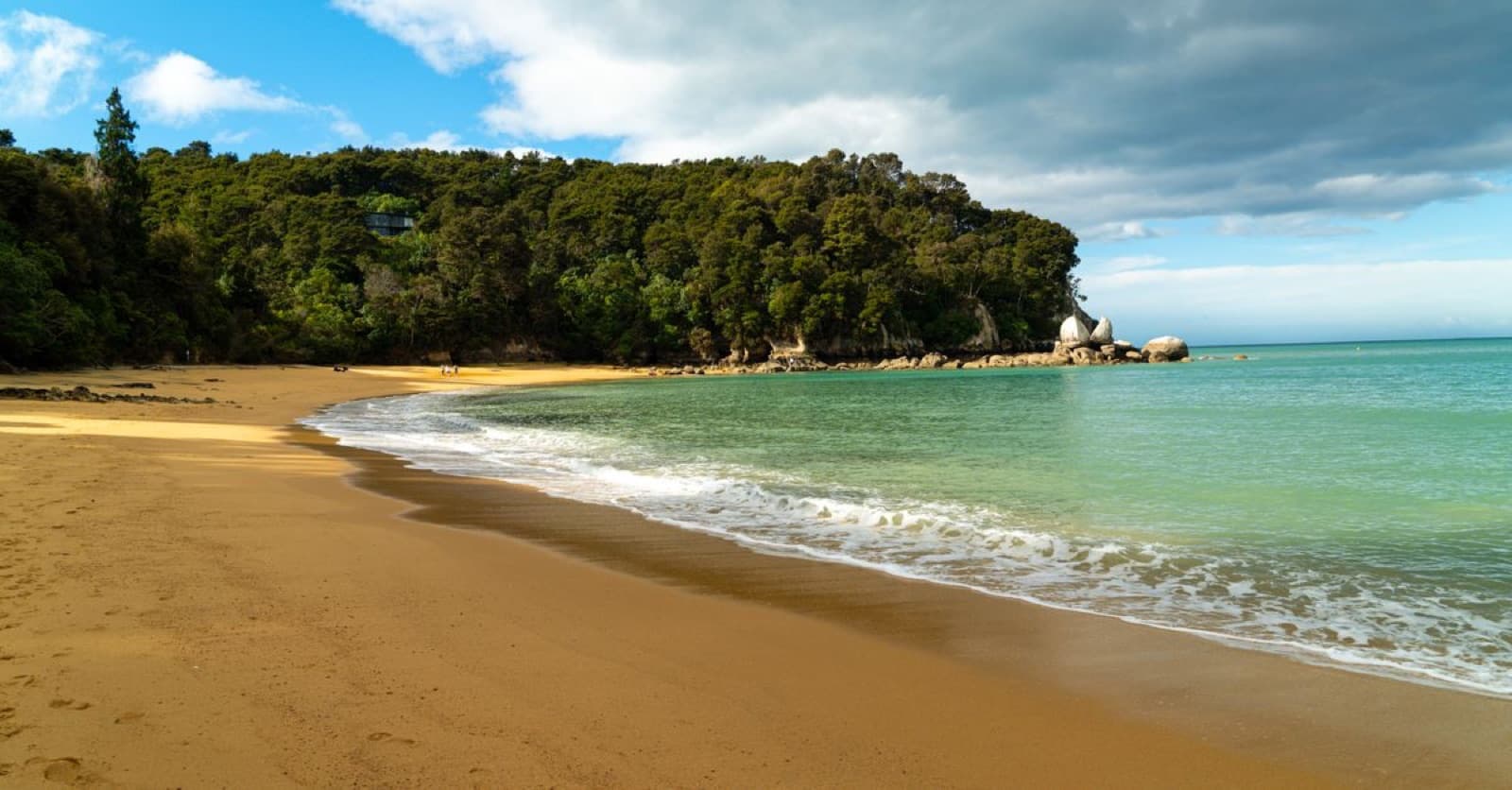
Curio Bay, in the remote Catlins on the South Island's southeast coast, is one of New Zealand's most special overnight spots: a campground above a beach where rare yellow-eyed penguins come ashore at dusk, a 180-million-year-old petrified forest revealed at low tide, and Hector's dolphins in neighbouring Porpoise Bay. Camp at the Curio Bay Camping Ground (book ahead in summer), keep your distance from wildlife, and use a self-contained camper.
Curio Bay is the reason to drive the Catlins, and the Catlins are the part of New Zealand almost everyone skips. That is the whole appeal: this is the far southeast, where the road turns away from the main route and the coast belongs to wildlife.
The petrified forest
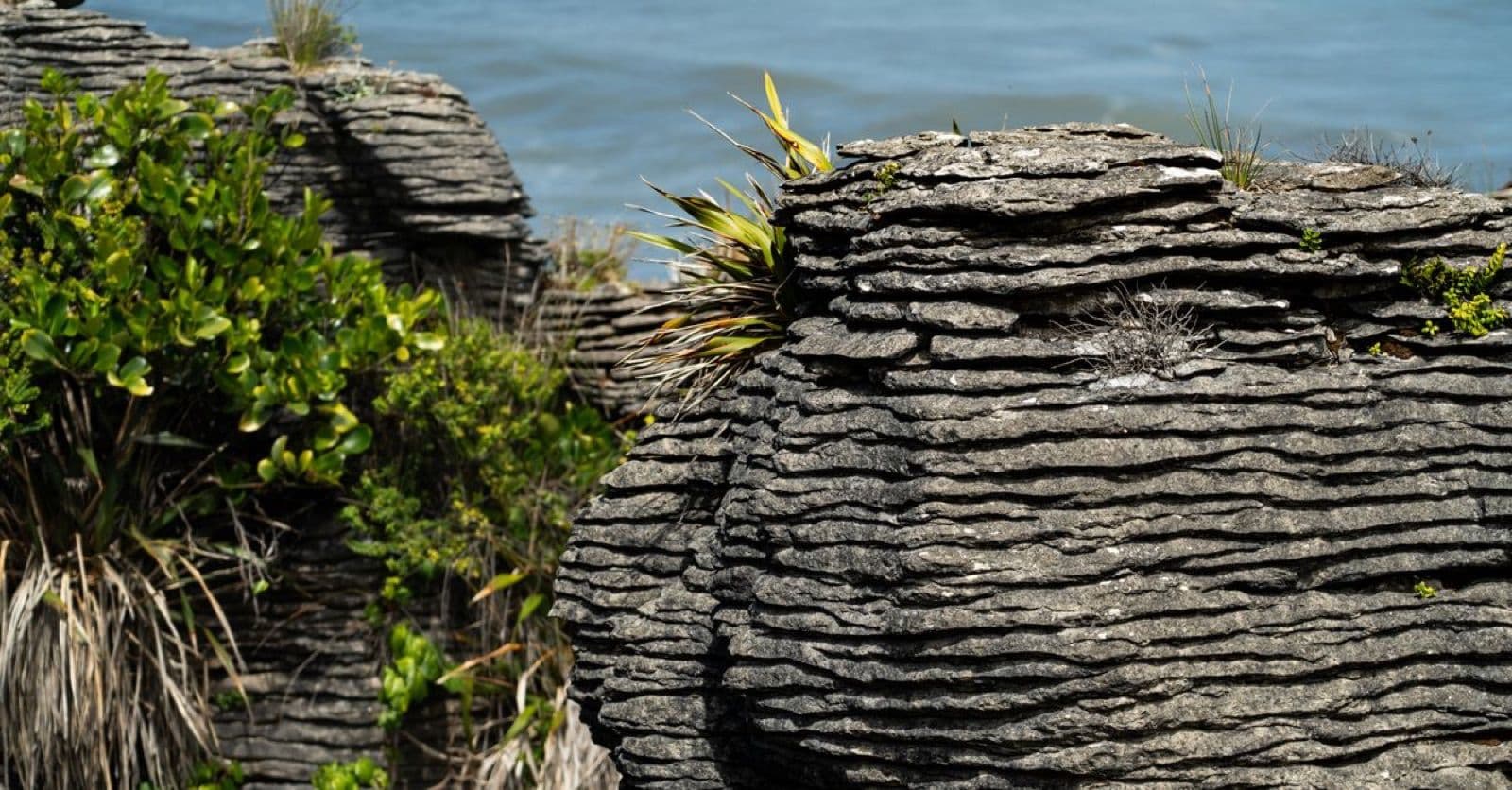
At low tide the rock platform at Curio Bay reveals tree stumps and fallen logs turned to stone — a **Jurassic forest**, roughly 180 million years old, preserved where it fell and now sitting in the surf.
You walk out onto it. There is no barrier and no ticket; there is an interpretation panel and then the fossil forest itself. Check the tide before you go, because at high water it is under the sea.
The penguins
**Yellow-eyed penguins** — hoiho, among the rarest penguins in the world — come ashore here at dusk to their nests in the flax above the beach.
This is not a guaranteed sighting and it should not be treated as a show. Stay well back, keep quiet, do not use flash, and never get between a bird and the sea. If they will not come ashore, it is usually because someone is standing where they want to land.
Dusk in summer is late — after nine — which is exactly the kind of thing a camper makes easy and a hotel does not.
What else is in the Catlins?
- **Nugget Point** — a lighthouse on a knife-edge headland with rock stacks below and fur seals on them. The most photographed spot in the region.
- **Purakaunui Falls** — a three-tier waterfall ten minutes' walk from the road, and the one on the postcards.
- **Cathedral Caves** — enormous sea caves accessible only around low tide, and only when the access track is open.
- **Slope Point** — the southernmost point of the South Island, marked by wind-bent trees that grow sideways.
Camping at Curio Bay
The campsite is right above the bay, which is the point — you are a short walk from the penguin viewing at dusk and the fossil forest at low tide.
It is exposed. The wind comes off the Southern Ocean with nothing in the way, and there is nothing between here and Antarctica. Park nose into the wind and expect it to be colder than the forecast suggests.
How do you fit it into a route?
The Catlins sit between Dunedin and Invercargill, and the coastal road takes a full day with stops. Most people either skip them entirely or give them two nights.
Give them two. It is the stretch that people who have driven the whole South Island most often name as their favourite, precisely because there is nobody there. Our longer route guides show where it fits.
Frequently asked questions
For its rare wildlife and geology: yellow-eyed penguins come ashore here, Hector's dolphins surf neighbouring Porpoise Bay, and a 180-million-year-old petrified forest is exposed at low tide.
Yes. Curio Bay is one of the best mainland places to see the endangered yellow-eyed penguin, which comes ashore in the late afternoon and evening. Watch quietly from a distance and never block their path.
Watch penguins and Hector's dolphins, explore the petrified forest at low tide, and use it as a base for the wider Catlins — waterfalls, sea lions and lighthouses.
Yes, at the Curio Bay Camping Ground on the headland, run by a community trust. It's basic and remote, so book ahead in summer and arrive with supplies; a self-contained camper is ideal.
Related pages
Sources & official info
Written by Lauran & Nikki
Family owners of JustGoodCampers, living in New Zealand and helping travellers explore it by camper. More about us