TL;DR
Your camper already includes all cooking gear, bedding, linen, camp chairs, and a table. You need to bring: soft bags (not hard cases), your driver's licence, a reusable water bottle, layers for cold evenings, sunscreen and insect repellent, sandals for campsite showers, a small daypack, and any personal medications. Download Campermate before you fly.
Most campervan packing lists are written for people who own the van. If you are hiring one, half the list is already on board — and packing it again wastes the storage you do have.
So this is the other kind of list: what is already there, what you genuinely need to bring, and the two things that will cost you money at the airport if you get them wrong.
What is already in the camper?
This varies enormously between rental companies, and it is the first thing to check rather than assume. On budget fleets, several of these are separate charges added at pickup.
In ours, all of it is included:
- **Bedding** — duvets, pillows and linen, made up.
- **A full kitchen** — pots, pans, kettle, plates, cutlery, chopping board, tea towels.
- **Camp chairs and a table** — which you will use every single day.
- **A cleaning kit** — dustpan, cloths, dish soap.
- **Luggage storage** for the suitcases you are not living out of.
Ask the question directly before you pack: is bedding included, is the kitchen equipped, are chairs and a table provided. The answers change what you bring more than anything else on this page.
What will cost you NZ$400 at the airport?
New Zealand runs some of the strictest biosecurity in the world, because its native species evolved without land mammals and cannot survive introduced pests.
**Failing to declare a biosecurity risk item is an instant NZ$400 infringement fee — even by accident** (Ministry for Primary Industries). It is not a criminal conviction, but it is NZ$400 and a long conversation at the end of a 24-hour flight.
Two things catch travellers most often:
- **Food.** The apple, the sandwich, the sealed snacks from the plane. Honey, fresh produce, meat and dairy are all risk goods. If in doubt, declare it — declaring costs nothing and the officer decides.
- **Used outdoor equipment.** Hiking boots, tent pegs and walking poles with soil on them get inspected. Clean them thoroughly before you fly, especially the tread. Soil is the highest-risk item you can carry.
Declare, and nothing happens. Do not declare, and the detector dog finds it.
What should you bring instead of a suitcase?
**Soft bags.** This is the single most useful packing decision for a campervan.
A hard suitcase does not fold, does not squash into a locker, and spends the trip on a bed or a seat. Two large holdalls hold the same clothes and disappear into a cupboard once unpacked. If you are flying with hard cases, ask whether your rental company will store them — ours will.
What clothing do you actually need?
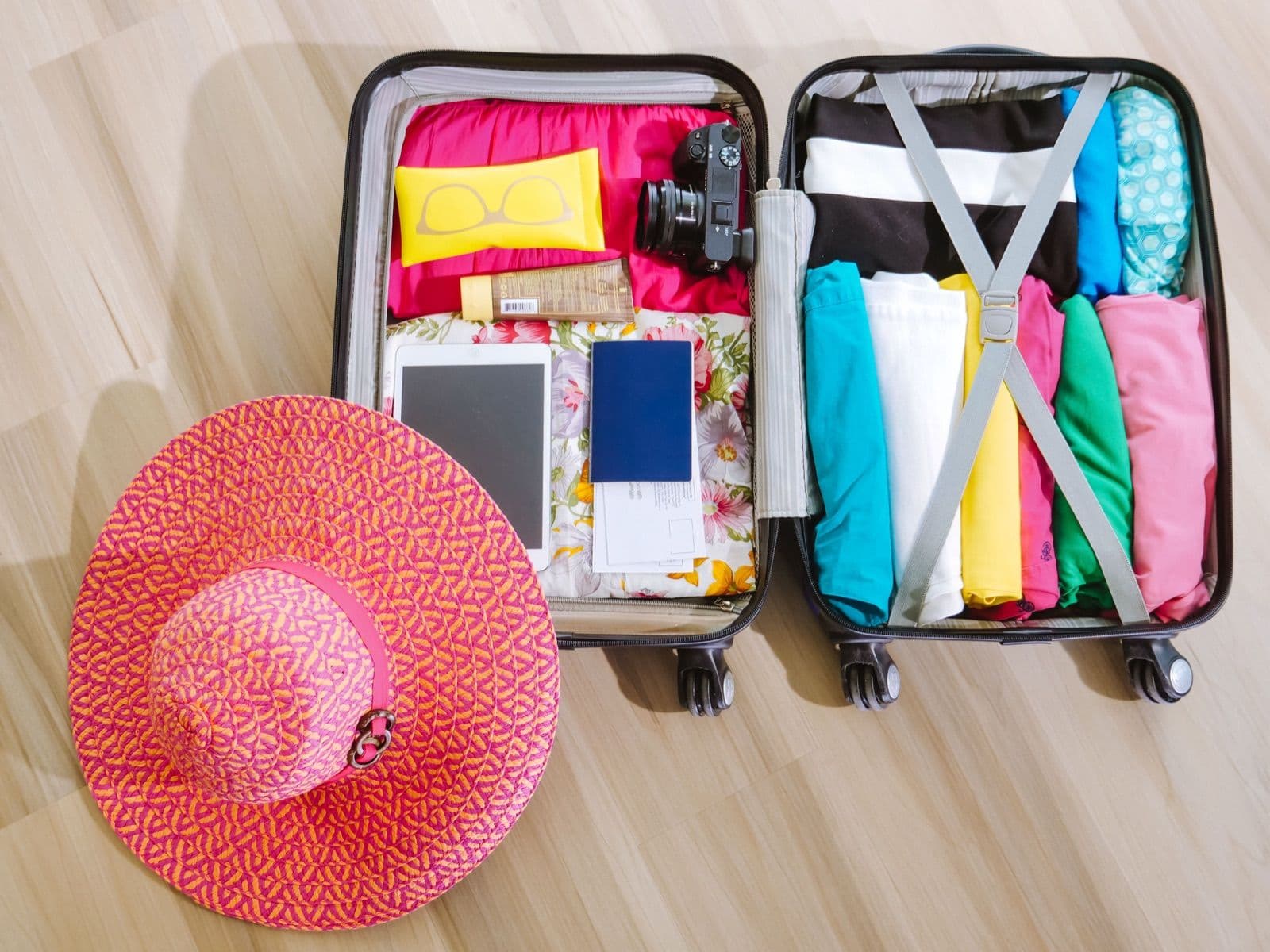
Layers, and fewer of them than you think. Every campsite of any size has laundry facilities, and holiday parks certainly do.
New Zealand's weather changes within a day rather than a season. Mean annual temperatures run from 10°C in the south to 16°C in the north (NIWA), but inland and alpine areas swing much harder than that suggests.
| Base layers | T-shirts, one long-sleeve | Thermals, top and bottom |
| Mid layer | Fleece or light jumper | Warm fleece plus a jumper |
| Outer | Waterproof jacket, always | Waterproof and windproof |
| Legs | Shorts plus one pair of trousers | Trousers, plus waterproof over-trousers |
| Feet | Trainers plus walking shoes | Walking boots, warm socks |
| Extras | Sun hat, sunglasses, swimwear | Hat, gloves, warm socks |
A waterproof jacket goes in whatever the month. So does a warm layer — an alpine campsite in January still drops sharply after dark.
What do people forget?
- **Insect repellent.** Sandflies on the West Coast and in Fiordland will end an evening outdoors. Buy it here; the local stuff works better.
- **High-factor sun protection.** The ozone layer is thinner over New Zealand and you burn faster than the temperature suggests, including through cloud.
- **A travel plug adapter.** New Zealand uses the same flat-pin plug as Australia — type I — which is not the European round pin.
- **Offline maps.** Large parts of the South Island have no mobile coverage, and it disappears exactly where the good campsites are.
- **A head torch.** More useful than a phone light for finding the toilet block, and it leaves both hands free.
- **A reusable water bottle.** Tap water is safe to drink across the country.
What documents do you need?
Two, and the second one surprises European visitors.
**Your driving licence**, which is valid here for up to twelve months. But if it is **not in English** — and Dutch and German licences are not — you also need an **International Driving Permit** or an official translation, carried with the original.
Arrange that before you fly. You cannot get one in New Zealand, and without it you are not legally driving.
The other is your **NZeTA**, the electronic travel authority, which most visitors need before boarding. Apply well ahead; it is not always instant.
What should you leave at home?
- **Anything the camper already has.** Check first, then pack.
- **Too many clothes.** Laundry is everywhere and cheap.
- **Hard suitcases**, if you can avoid them.
- **Muddy boots**, unless you clean them first.
- **Food from home.** It is either a risk item or available here.
What is in ours is listed on what is included, and if you are still deciding which van fits your gear and your group, our campers sets out the storage in each. For what the trip costs once you are here, we have itemised it.
Frequently asked questions
Soft bags rather than hard cases, warm and waterproof layers, your driver's licence (plus an international permit or translation), sunscreen and insect repellent, sandals for shower blocks, a small daypack and a reusable water bottle. Cooking gear and bedding are already in the camper.
Yes. Our campers come with duvets, pillows, linen and towels, so you don't need to bring sleeping bags. The kitchen is fully stocked too — pots, pans, plates, cutlery and gas.
Your passport, driver's licence and international permit, a credit card for the insurance bond, warm and waterproof layers, strong sunscreen (the sun is fierce), and the free CamperMate app for finding campsites.
Soft luggage. Duffel bags and backpacks pack down and fit the storage far better than rigid suitcases. If you have bags you don't need on the road, our luggage storage is included, so you travel with only what you need.
Sources & official info
Written by Lauran & Nikki
Family owners of JustGoodCampers, living in New Zealand and helping travellers explore it by camper. More about us