TL;DR
Over two weeks for two people driving 2,000 km, a campervan and a rental car with motels land within about NZ$100 of each other: roughly NZ$5,030 against NZ$5,110, or NZ$180 per person per day either way. Money is therefore not the deciding factor for a couple. For a family of four it is: the camper comes out about NZ$1,100 cheaper over the same fortnight, because New Zealand motel units are built for two and a family usually ends up booking two rooms a night. A campervan wins on where you can stop and how little you have to book ahead; a rental car wins on trips under a week, city-heavy trips, and when you would rather fly between the islands than drive. One cost people miss: road user charges of NZ$0.084 per kilometre apply to diesel vehicles, which is nearly every campervan, but not to a petrol car.
Choosing between a campervan and a rental car in New Zealand is the first real decision of the trip, and it shapes everything after it — where you sleep, how much you book in advance, and how far ahead you have to decide anything at all.
Almost every article on this question answers it with a list of advantages and no arithmetic. So we did the arithmetic. Below is the same fourteen-night trip for two people, priced twice: once in a campervan and once in a rental car with motels, using our own published rates and the current fuel price.
The short version surprises most people. The two come out within about NZ$100 of each other. Which means the money is not the argument, and you get to choose on something better.
NZ$5,030
Campervan, 14 nights for two
hire, fuel, RUC, campsites, food
NZ$5,110
Rental car with motels
hire, fuel, rooms, food
NZ$180
Per person per day
near-identical either way
NZ$0.084
Road user charges per km
diesel only — not petrol cars
Which is cheaper, a campervan or a rental car?
Over a full trip, neither — and that is the honest answer that the pros-and-cons articles avoid.
A car is obviously cheaper per day. It is also the option where you buy a bed every single night, and that is the line that closes the gap. Here is the whole thing for two people, fourteen nights, about 2,000 kilometres, travelling in April.
| Vehicle | NZ$3,150 | NZ$910 |
| Fuel | NZ$538 | NZ$420 |
| Road user charges | NZ$168 | — |
| Beds for 14 nights | NZ$330 | NZ$2,380 |
| Food | NZ$840 | NZ$1,400 |
| Total | NZ$5,026 | NZ$5,110 |
Eighty-four dollars apart, over a fortnight. That is inside the margin of anyone's actual spending, and it means a campervan is not the expensive option people assume it is, nor the bargain that rental companies imply.
Two things in that table deserve a note, because they are where the honesty lives.
The campervan rate is ours and it is published: NZ$225 a night for the 2-berth in April. The car and motel figures are not published rates — they are what we consistently see, around NZ$50 to 80 a day for a compact car and NZ$150 to 200 for a motel room for two. Your own quotes will move them.
The food line does most of the work. A camper has a full kitchen, so most nights you cook; with motels you eat out more often than you plan to. That single habit is worth around NZ$560 across two weeks, and it is most of the reason the totals meet in the middle.
What do you actually get for the same money?
Since the totals match, this is the real question.
| Booked in advance | The camper, and little else | Every night of accommodation |
| Where you can stop | DOC sites, freedom camping areas, holiday parks | Towns with a motel |
| Changing plans | Decided over breakfast | Rebooking and cancellation windows |
| Cooking | Full kitchen on board | Kitchenette if the room has one |
| Space indoors when it rains | The van | A room, which is bigger |
| Parking in Auckland or Queenstown | Takes thought | Straightforward |
That is the trade in one grid. A campervan buys you the freedom to not decide; a car and a room buy you more space and easier parking. Neither is a better holiday in the abstract — they are different holidays at the same price.
The cost most comparisons leave out
New Zealand builds road tax into the price of petrol, but not diesel. Diesel vehicles pay by distance instead, through Road User Charges — and almost every campervan on the New Zealand rental market runs on diesel.
We pass RUC through at NZ$0.084 per kilometre, charged from the odometer at the end of your hire, so you only pay for the distance you actually drive. On the 2,000 km trip above that is NZ$168. On a 5,000 km trip covering both islands it is NZ$420.
A petrol rental car pays none of it, because its road tax is already in the pump price. That is a genuine point in the car's favour, and you will not find it in the comparison published by the largest campervan company in the country.
It is also avoidable on our side. Our Pīwakawaka runs on petrol, so no RUC applies to it either. Our guide to road user charges explains how the system works if you want the detail.
What about the bond and the insurance excess?
Both options put a large number on your credit card, and both get overlooked at the quote stage.
- **Campervan.** Our Basic cover carries a NZ$5,000 bond, pre-authorised at pickup rather than charged. Peace of Mind cover removes it entirely for NZ$45 a day on the 2-berth.
- **Rental car.** Standard excess is commonly NZ$3,000 to 5,000, and reducing it typically runs NZ$25 to 40 a day.
- **Either way**, that amount sits against your credit limit for the whole trip, which matters more than people expect when they are also paying for activities and fuel.
Compare the daily rate plus the excess reduction, not the daily rate alone. Otherwise you are comparing two different things and the cheaper-looking one usually is not.
Where can you sleep with each?
This is where the two trips diverge most, and it comes down to one certificate.
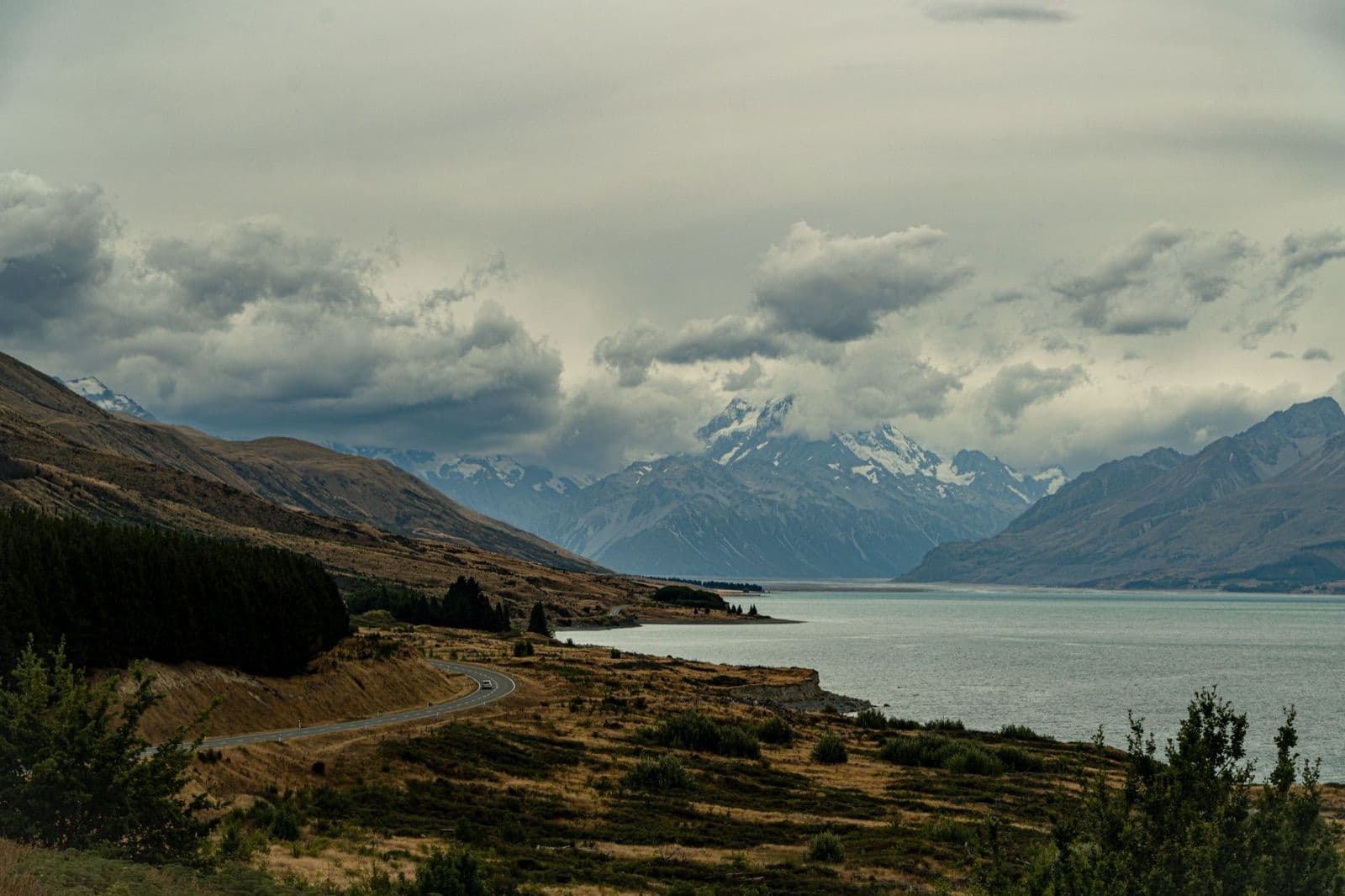
A campervan with New Zealand's Certificate of Self-Containment stores its own waste water and has a fixed toilet on board. That certificate is what opens the several hundred Department of Conservation campsites and the designated freedom camping areas — many of them free, most of the rest around NZ$10 to 25 a night, and a good number of them in places where there is no accommodation of any kind.
All of our campers carry it. Our freedom camping guide covers where you are allowed to park and how to check before you do.
With a car you are choosing between motels, hostels, holiday park cabins and hotels, all of which need booking. Between roughly 20 December and the end of January that booking happens months ahead, because it is the New Zealand summer holidays and local families have already reserved the good places.
When is a rental car the better choice?
In three situations we would take the car ourselves, and we would rather say so than pretend otherwise.
- **Trips under a week.** Collection, the first supermarket shop and the return take a fixed amount of time, and on a five-day trip that is a meaningful share of it.
- **City-heavy trips.** If Auckland, Wellington and Queenstown are the point rather than the gaps between them, a camper is mostly a parking question, and the campsites sit outside town anyway.
- **If you would rather fly between the islands.** Some people fly Auckland to Queenstown and hire at each end instead of driving the length of the country. That is simple with cars. With a camper it means a one-way hire and a relocation fee, so it is worth pricing before you commit.
Two things often listed as drawbacks are, in our experience, not.
The first is **winter**. June to August is a genuinely good time to travel here, particularly on the North Island where it does not freeze, and the campers have heating — so it is warm inside with a view out, rather than something to endure. It is also about a third of the summer price, and the campsites are empty.
The second is **young children**. A camper works better with small children than hotels do, not worse. You are never far from a toilet or somewhere to nap, and a tired child sleeps while you drive. In our 4-berth the beds are fixed, so there is nothing to assemble at the end of a long day.
Does the same maths work for a family of four?
It does, and the gap widens — this time clearly in the camper's favour, for a reason that has nothing to do with the vehicle.
Run the same fourteen nights for two adults and two children, in April, over the same 2,000 kilometres. The 4-berth is NZ$335 a night. The comparison on the other side is where most people's budget goes wrong, so it is worth being exact about it.
Motel units in New Zealand are built for two. Family units that genuinely sleep four exist, but there are not many of them and they go first, particularly over the summer holidays. In practice a family of four books two rooms most nights — which doubles the largest line in the budget.
| Vehicle | NZ$4,690 | NZ$1,540 |
| Fuel | NZ$700 | NZ$539 |
| Road user charges | NZ$168 | — |
| Beds for 14 nights | NZ$450 | NZ$4,200 |
| Food | NZ$1,400 | NZ$2,240 |
| Total | NZ$7,408 | NZ$8,519 |
For a family the camper comes out about NZ$1,100 ahead over the fortnight — NZ$132 per person per day against NZ$152. The 4-berth costs more to hire than a car does, by a wide margin. It still wins, because you are not buying two rooms a night for fourteen nights.
That is the opposite of the two-person answer, where the totals were within eighty dollars of each other. The more of you there are, the more the camper pulls ahead, because the vehicle sleeps everyone for one price while rooms are sold by the pair.
What that table cannot price is the part parents tend to care about most. You are never more than a few steps from a toilet, a snack or somewhere to lie down. A tired child sleeps while you drive rather than in a restaurant queue. And in our 4-berth the beds are fixed, so nothing has to be assembled at the end of a long day — which sounds minor until the third evening.
So for four the money and the practicalities point the same way. Children travel very happily in a camper, and four adults are well served too — the Kākāpō sleeps four on a king-size and a double, both permanently made up, with an oven, a hot shower and heating on board.
How long does the driving really take?
This catches out people in both vehicles, so it is worth stating once.
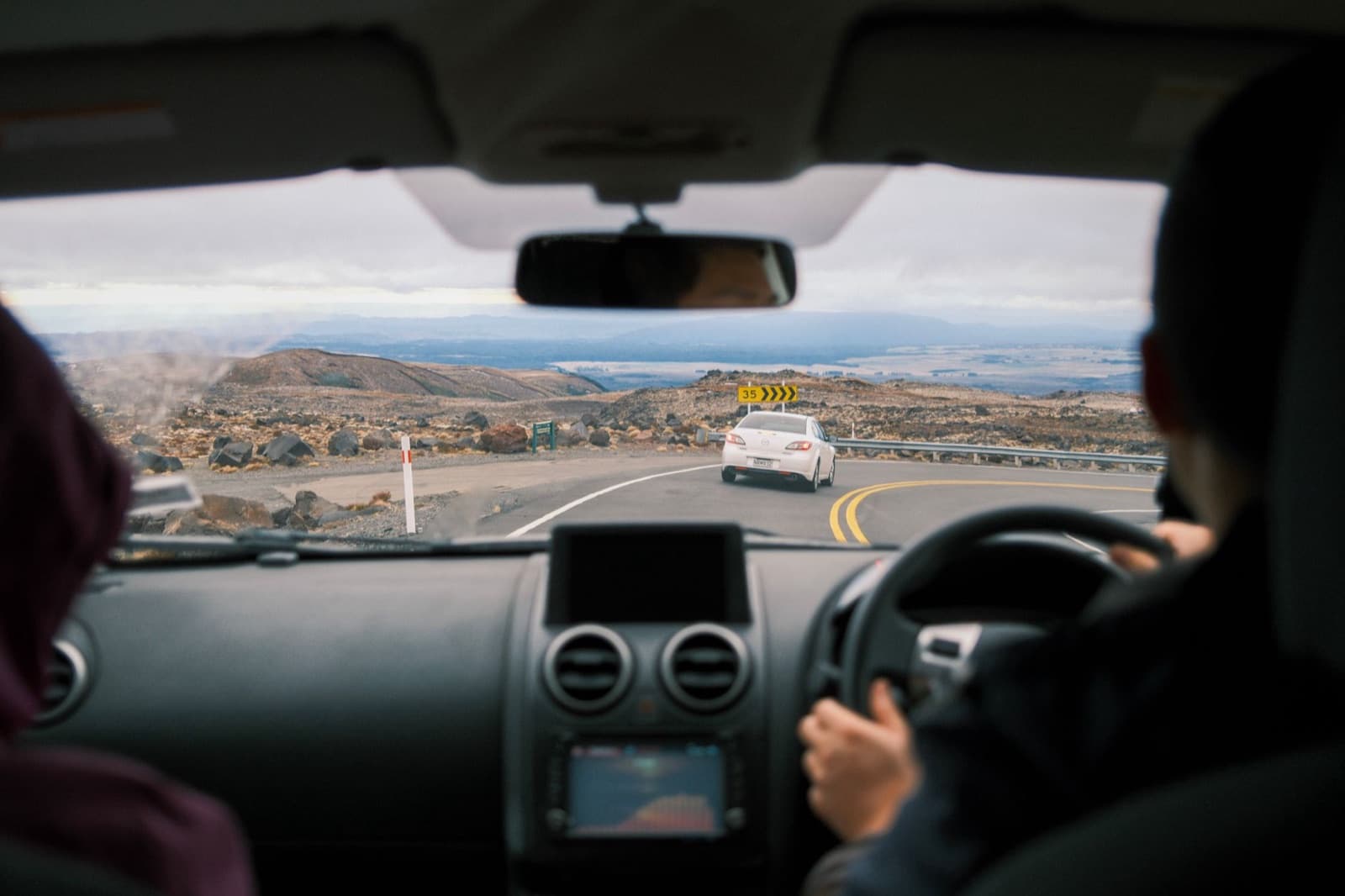
New Zealand looks compact on a map and is not: Auckland to Queenstown is further than Hamburg to Barcelona, on smaller roads. Satellite navigation is systematically optimistic here. Add about a third to whatever it tells you, and closer to half in a camper over the passes.
Our working rule is no more than 250 kilometres in a day, and two nights in a place rather than one wherever you can manage it. The single most effective change to almost any New Zealand itinerary is fewer places and more nights in each.
What does a campervan cost per night through the year?
More than any other decision you make, the month you travel sets your budget. These are our own rates, so they are real numbers rather than indicative ranges.
| January | NZ$389 | NZ$595 |
| February | NZ$389 | NZ$495 |
| March | NZ$319 | NZ$450 |
| April | NZ$225 | NZ$335 |
| May | NZ$129 | NZ$249 |
| June | NZ$119 | NZ$235 |
| July | NZ$119 | NZ$239 |
| August | NZ$119 | NZ$239 |
| September | NZ$129 | NZ$255 |
| October | NZ$199 | NZ$335 |
| November | NZ$329 | NZ$475 |
| December | NZ$375 | NZ$545 |
The same fortnight that costs NZ$3,150 in April costs NZ$1,666 in June and NZ$5,446 in January. Rental cars move with the season too, but nothing like as far — which is why a camper looks expensive in January and looks obvious in May.
March and April are the sweet spot if you can choose: settled weather, the summer crowds gone, and a camper at roughly half the January price. May and September are the value months, close to the winter rate without the winter.
Do you need a special licence to drive a campervan here?
No. Both of our campers are driven on an ordinary car licence, and neither is a truck to handle — the 2-berth is the footprint of a large van.
You will need your licence in English, or an official translation alongside it, plus an International Driving Permit if your licence is not in English. Carry the physical licence rather than a photo of it.
The adjustment that actually takes a day or two is driving on the left. Roundabouts and the first turn after a fuel stop are where everyone wavers. Our advice is to not collect the camper on the morning you land: sleep off the flight first, then start. We include the airport transfer either way.
Can you take a campervan one way between the islands?
You can, and it is worth knowing that the answer differs between vehicle types.
One-way rentals usually carry a relocation fee, because somebody has to bring the vehicle home. With a car that fee is modest and the big companies have depots everywhere. With a camper it is a bigger number, and smaller fleets often will not do it at all.
We take Auckland to Christchurch on hires of three weeks or more. Under that we would rather you did one island properly, which is also the trip we would recommend on its own merits — the North Island route is built around exactly that.
What about the ferry between the islands?
The Cook Strait ferry between Wellington and Picton prices by vehicle length, so a campervan costs noticeably more than a car. Build that into the comparison if you are doing both islands.
Two practical points. It is the only crossing, and in high season it sells out weeks ahead. And the run through the Marlborough Sounds on the approach to Picton is one of the best hours of the trip in clear weather, so it is worth booking a daylight sailing rather than the cheapest one.
So which should you choose?
If you have two weeks or more, you are travelling as a couple or a small family, and the point of the trip is the country rather than the cities: take the camper. Not because it saves money — the table above shows it roughly does not — but because you stop having to plan, and because you wake up in places a room cannot reach.
If you are here for under a week, staying mainly in cities, or you would rather fly between the islands than drive them: take the car and book good rooms. That is not us arguing against our own business. It is what actually works, and a trip that suits you is worth more to us than a booking that does not.
If you land in Auckland and are still deciding, our full cost breakdown itemises every line of a camper trip, and our campers sets out what fits in each one. Both of ours are certified self-contained, and everything that comes with them — bedding, the kitchen, camp chairs, the airport transfer — is in the nightly rate rather than added at pickup.
And if you are torn, send us a message. We have driven these roads, we will tell you honestly when your plan is too full, and we would rather point you at a car than sell you the wrong van.
Related pages
Sources & official info
Written by Lauran & Nikki
Family owners of JustGoodCampers, living in New Zealand and helping travellers explore it by camper. More about us